View Project

Redefining climate leadership to help save European forests.

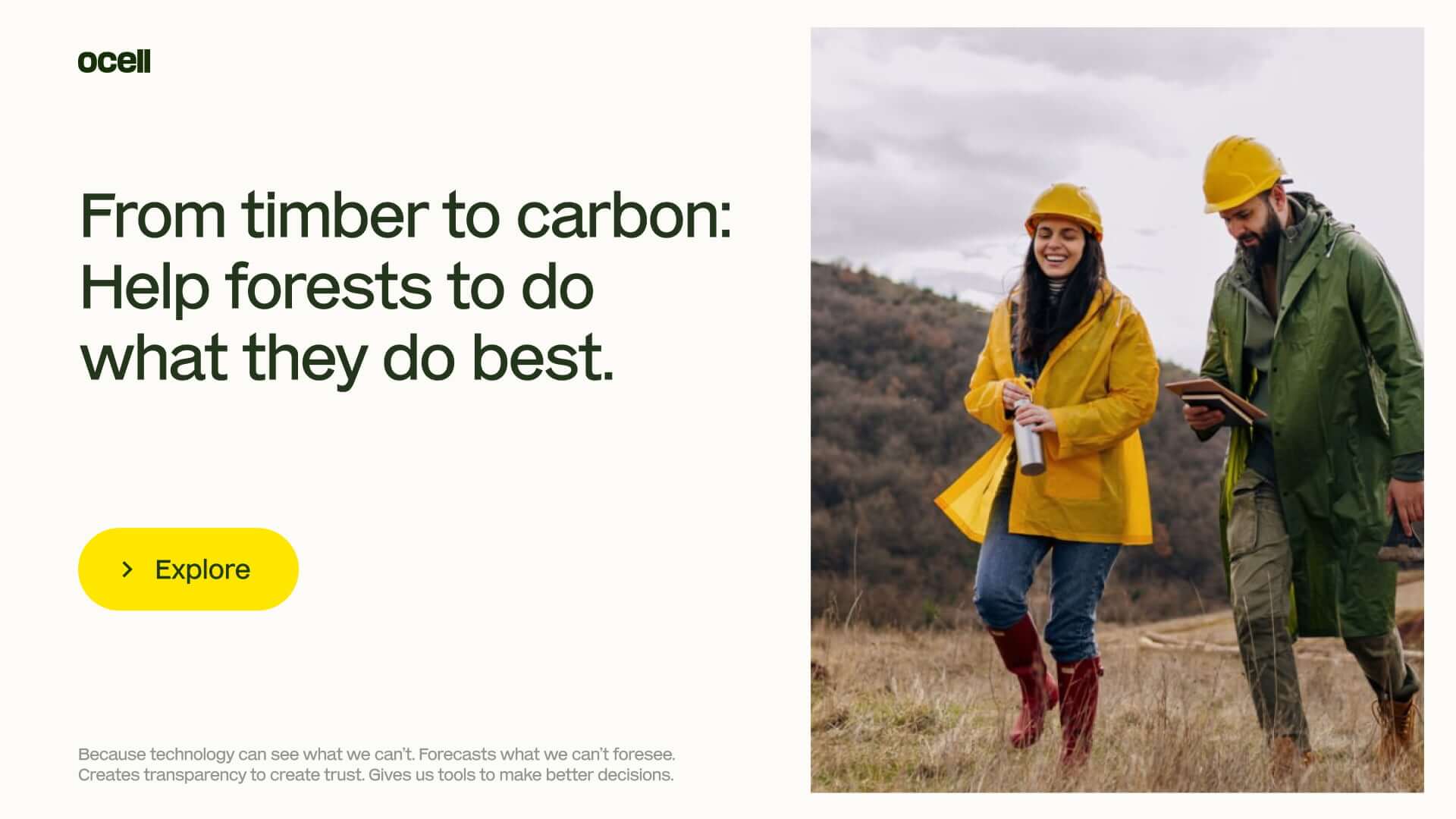
For years, ocell focused on forestry software. In 2024 ocell’s technology and high-resolution forest data created a new opportunity: high-quality CO₂ credits. However, this meant ocell needed to take leadership in a new competitive landscape filled with glossy promises and generic buzzwords.
client

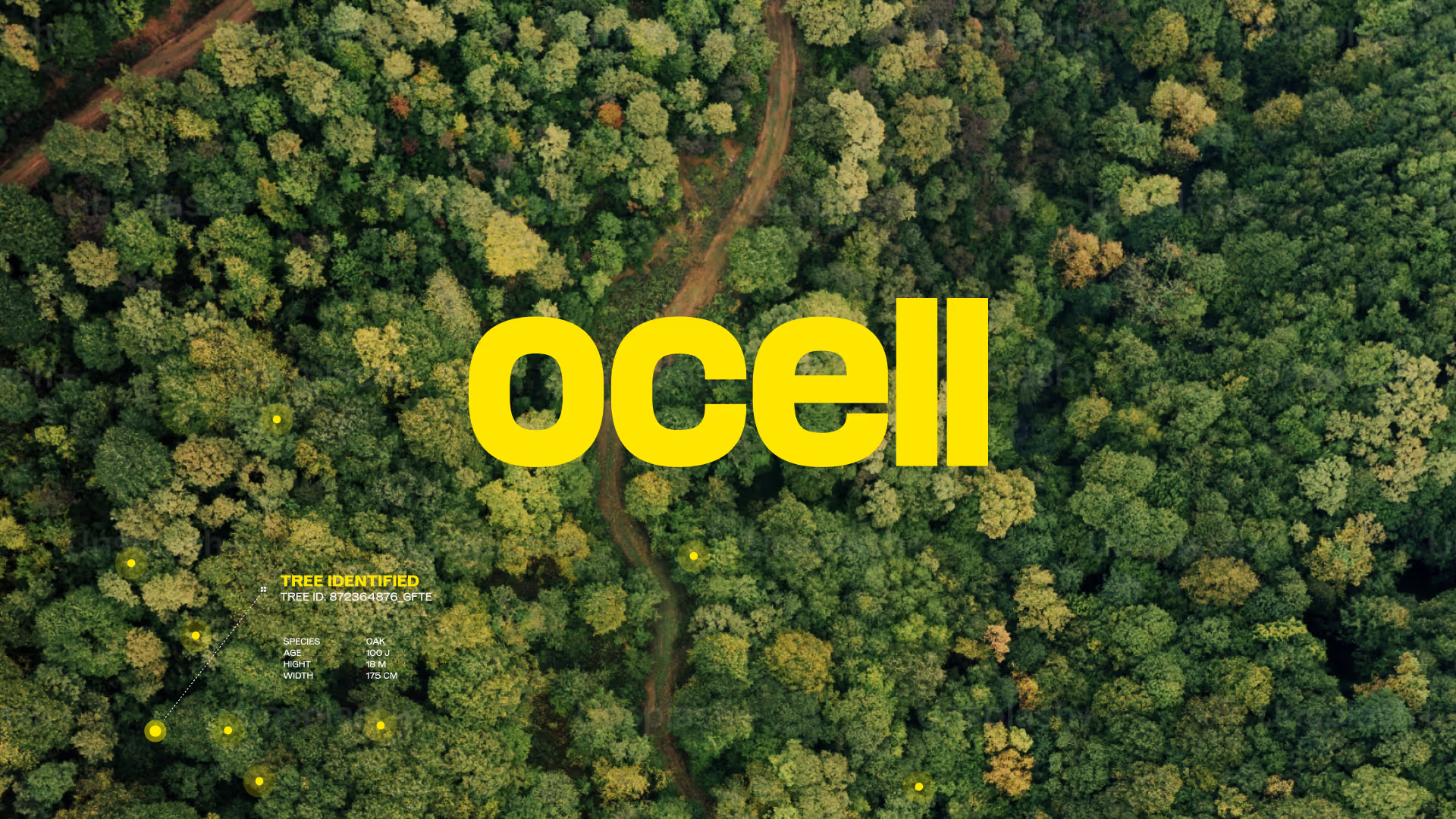
ocell is a Munich-based scale-up using AI and aerial data to optimize forest management and carbon capturing.

services

Qualitative Research
Brand Strategy
Mission Development
Corporate Design
Messaging
Website Design

industry

Clean Tech

We finally have a brand that reflects who we are. This isn’t just about software anymore – it’s about the future of European forests. 

David Dohmen, CEO of ocell.

The Challenge

With its high-resolution forest data, ocell opened the door to credible, high-quality CO₂ credits. But the carbon credit market was crowded with vague claims and greenwashing. Many brands sounded interchangeable: big visions, little evidence. Forestry professionals and sustainability managers had grown skeptical. In interviews we heard again and again: “We’ve seen too many bad things wrapped nicely.”

Our Solution

We went deep—20 stakeholder interviews, market analysis, and a full identity audit. We looked at the language and promises of over 100 Green Tech brands. As research advanced, one thing became clear: we needed to rebuild trust with substance and without clichés or marketing spin – a brand people would entrust with the future of our forests.

Defining the Mission

ocell’s original mission blended into the Green Tech noise. In fact, five competitors used identical language. In internal interviews and workshops, we experienced a passionate team committed to building the technology our forests actually need. This led to a new, simple, and inspiring mission: “Build the tech that saves our forest.” A call to action bold enough for the climate crisis, grounded enough to unite forest and climate professionals.

Crafting the Visual Identity

We reimagined the brand to match its tech and nature-driven mission. The yellow remained, but warmer and more grounded, paired with earthy greens to signal a strong link to nature. The logo shed its fashion aesthetic for something more accessible: lowercase, bold, and human. Typography and illustration now bridge nature and technology. The result is a flexible, scalable system that’s unmistakably ocell.

Shaping the Messaging

We realized trust cannot be created through big promises but through leadership and honesty. This is why we highlighted what made ocell Europe’s most trusted forest intelligence partner. The only one with deep roots in forest management and the data to back every claim. We crafted a new tonality and value proposition for forest owners and sustainability leaders. We made sure it was built on honesty, clarity, and proof. No buzzwords. No greenwashing. No bla bla.

Redesigning the Website

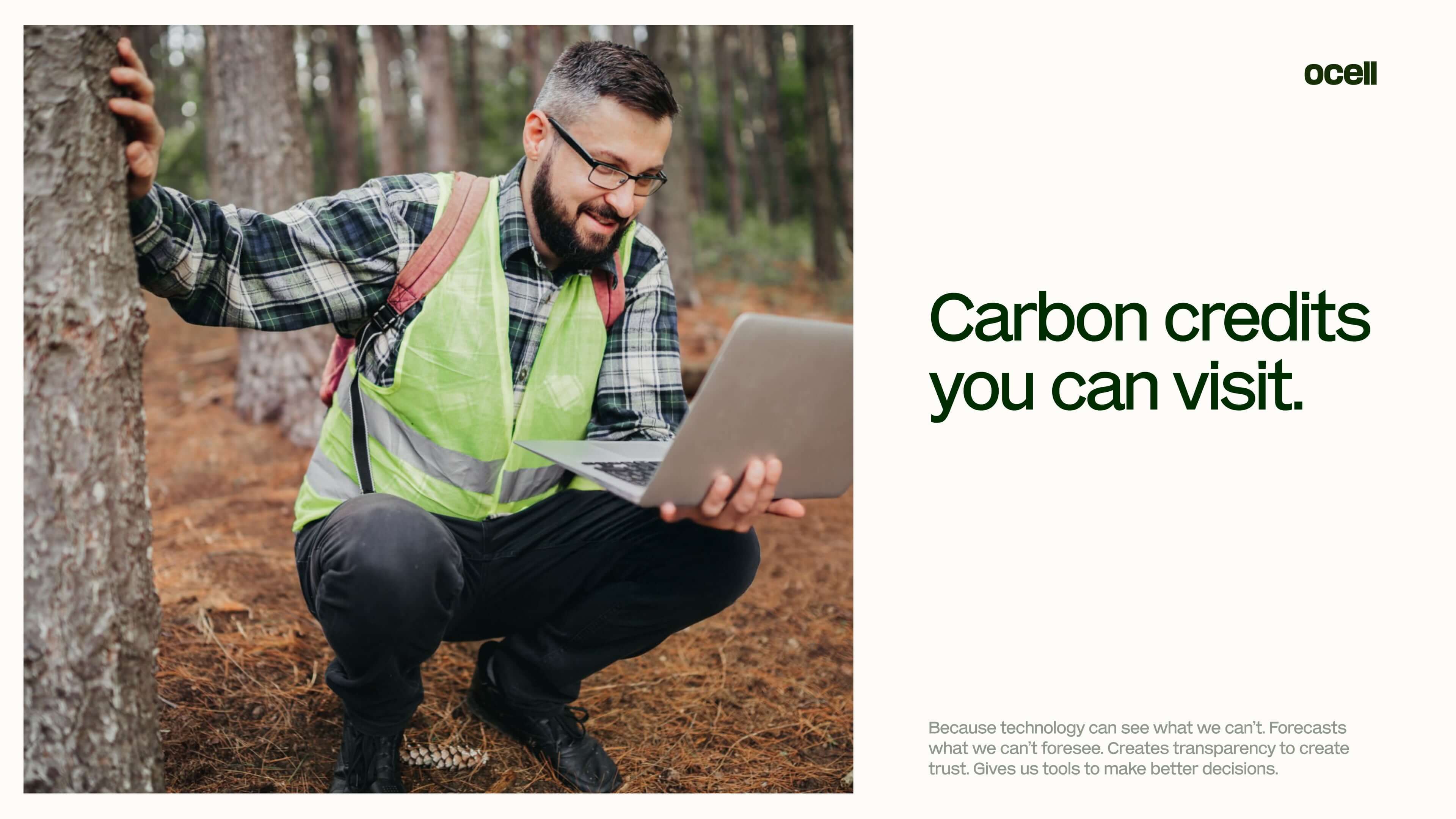
We shaped the new website experience around ocell’s unique credibility—earned through years of work on the ground, not just in labs or spreadsheets. Its core task was to make the technology tangible through interactive graphics and an immersive reading experience. The result offered depth without jargon and credibility without overclaiming. Designed to serve two audiences (practical foresters and sustainability leads who demand traceability), the site uses bold copy, clear UX, and real-feeling visuals.

The Impact

The shift was immediate. Internally, the team rallied behind the new identity—wearing it, sharing it, owning it. A brand validation process with all stakeholder groups confirmed the rebranding hit home. Early investor feedback has been strong. And ocell’s founders are already using the brand on stage at events across Europe.

The new brand is opening doors to new markets, new partners, and new talent. But more than that, it’s raised the bar: for what trust looks like, for what a Green Tech company can sound like—and for what’s possible when you ask yourself what really drives you.


With special thanks to:
Thomas Opara (Research)
Annika Grothe (UX Design)

Previous
Next

Talk to Tanja to start solving your challenge.

→ Get in Touch